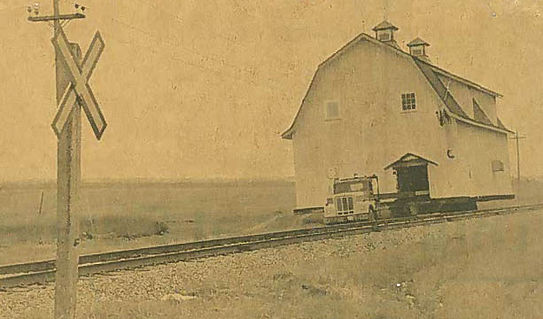
The multi-use barn was donated by the Morden Research Station in 1989 and moved to the PTM grounds in 1990. Although the interior no longer bears any resemblance to the original Percheron barn, the wooden exterior does remain intact beneath the metal-clad exterior. Horse drawn equipment can also be found on display.
The barn was built in 1928 to house the research station's Percheron horses. Within six years, the station gained recognition for its work with horses, both on the Canadian Prairies and in the mid-western U.S. By 1948, the Percheron barn was converted to the young stock barn, and in 1961 after ending all animal research, to a plant growth rooms building.
When the barn was built, W.R. Leslie, superintendent of the station, described it saying, "It is a horse barn of economical construction, but modern type.” The barn appears to have been of special design specifically for horses, drafted by the architects working in the draughting room of the Central Experimental Farm.
One of the chief features of the design is its ventilation system. It was already recognized that ventilation was key to preventing dampness and disease among the animals. Thus, the barn was built only 32 feet wide so that it could heat up sufficiently during the cold winter months. The hot air was then able to rise up through the ventilators, while fresh air was drawn in through an open window. During the summer, open windows and doors carried out excess moisture, poisonous gases, and odours. Care was taken to ensure a sanitary and warm horse barn. The concrete floors cleaned easily and the wooden walls were insulating.
During its time as a growth rooms building, the barn was transformed. Many of the original openings, such as the large animal entry, hayloft door, and numerous first story windows, were closed. The interior became a lab with white walls and ceilings, narrow hallways, and climate controlled compartments for botany experiments.